
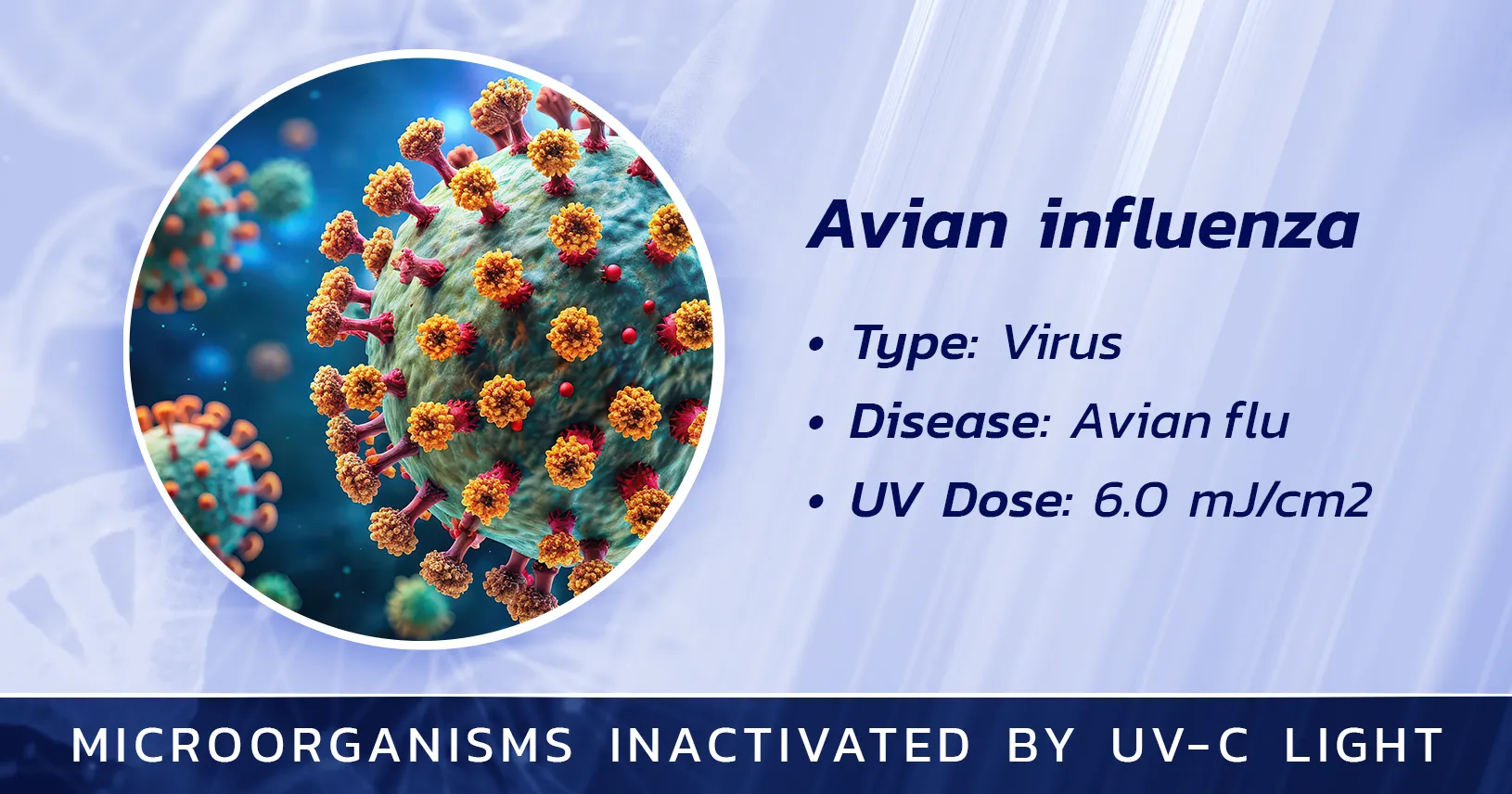

What is Avian influenza?
Avian influenza is a disease which is predominantly hosted and spread by the bird population of the world. While it primarily affects the health of our feathered friends, it can also affect animals and humans. While documented as early as 1878open_in_new, the type A Bird Flu H5N1 virus was first observed in America in wild birds in 2015, and then in poultry stock in 2022open_in_new.
It has become such a threat to the health of the poultry and dairy cow industryopen_in_new that many chickens, hens, and turkeys in positive-testing farms have to be culled (slaughtered) by mandate of the US Dept. of Agriculture, in an effort to contain the surge of infections. This led to the 2024–2025 shortage of eggs which affected most American shoppers, restaurants, and food companies. While millions of bird deaths and extensive barn clean-ups have helped curb the outbreak, farmers, disease experts, and government officials agree that the deadly H5N1 bird flu virus remains an ongoing issueopen_in_new in need of a solution.
Where is it Found?

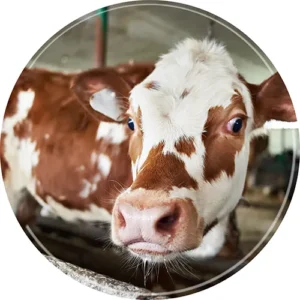
What can it infect?

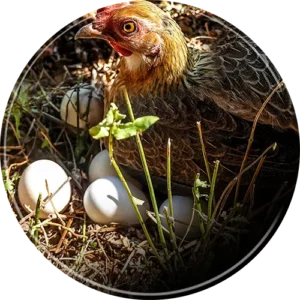

How does it spread?
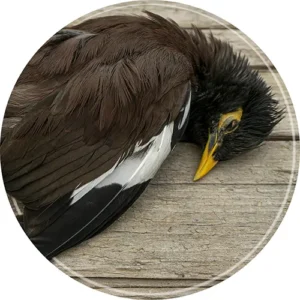

Preventing the Spread of Avian influenza
Avian influenza is highly contagious among birds. Typically, wild birds like ducks, geese, and swans are the carriersopen_in_new. Although these birds frequently don’t show symptoms, they can spread the virus to domestic birds like chickens and turkeys. The primary means of infection is contact with saliva, nasal secretions, and feces, but it can also be picked up via contaminated bedding, bird feed, equipment, or surfaces.
As recommended by the USDAopen_in_new and OSHAopen_in_new, help prevent human and avian infection with these sanitary practices:
- Keep poultry separate from other animals, as well as their feed or equipment
- Don’t use untreated water from ponds and streams to feed your flock
- Maintain a 30-day separation before introducing new birds into the flock.
- Designate certain clothes and boots to wear around the coop, or disinfect your shoes before visiting birds
- Do not touch dead birds, potentially contaminated water or surfaces, animal waste, bedding, or raw and uncooked animal products
- Use personal protective equipment, wash hands thoroughly, and avoid touching your face after contact with potentially diseased birds
- Limit farm visitors to only the required people
Above all, keep an eye out for birds exhibiting telltale symptoms and isolate them until Avian influenza can be confirmed. Unfortunately, the often-prescribed way to prevent its spread is by culling some or all the birds. Upwards of 175 million birdsopen_in_new have died from Bird flu or been slaughtered to help contain the spread.
Get More Protection with UV Disinfection
In addition to the above preventative measures, germicidal ultraviolet (UV-C) disinfection can inactivate Avian influenza at farms — whether on surfaces, in air, or in water. It can also guard meat processing and lab workers from infection. Shop our products at AtlanticUltraviolet.comopen_in_new.
Learn about these applications:
View all UV-C Application Pages.
Our germicidal lamps produce ultraviolet wavelengths at 254 nanometers, the region of maximum germicidal effectiveness. Read our FAQ blog post to learn more. See UV-C dose below.
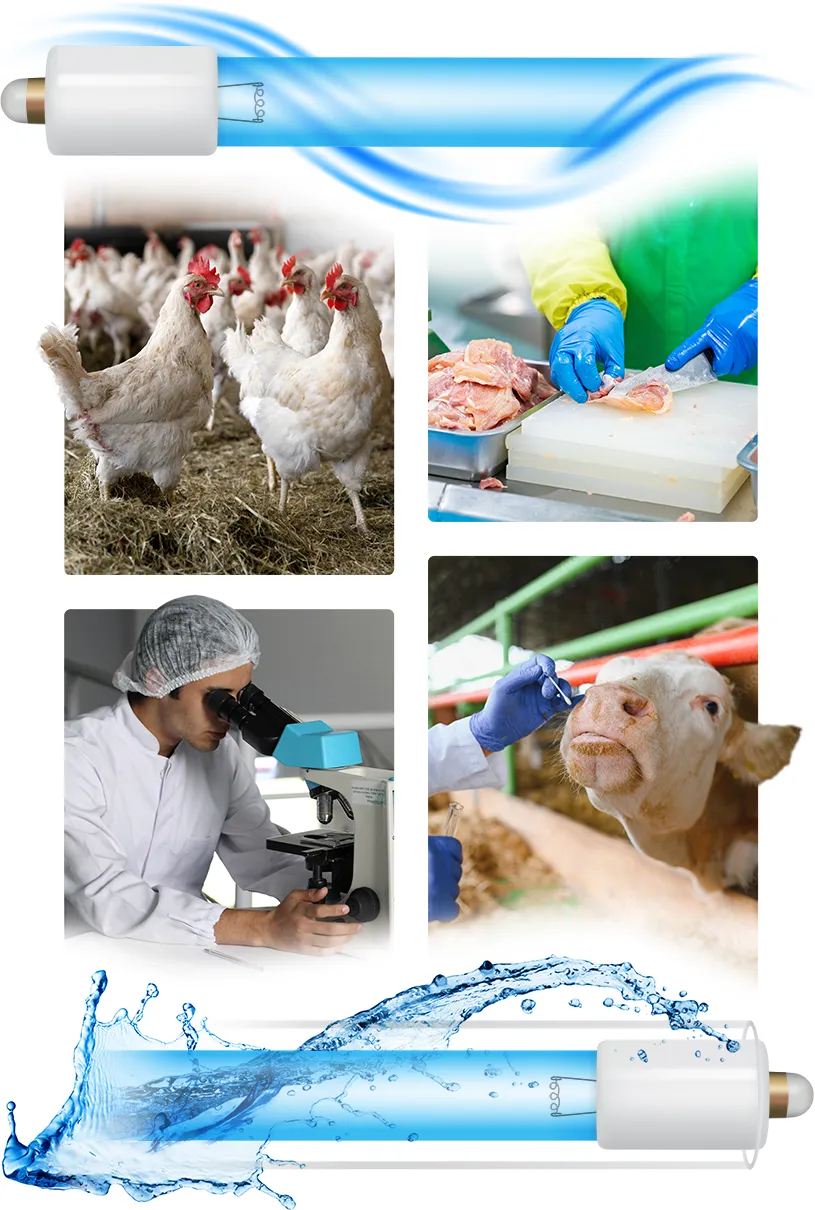
Avian influenza: Classification & UV-C Dose for Inactivation
| Organism: | Alternate Name: | Type: | Disease: | UV Dose*: |
|---|---|---|---|---|
| Avian influenza | H5N1, Bird Flu, Fowl Plague | Virus | Avian Flu | 6.0 mJ/cm2 |
* Nominal Ultraviolet dosage necessary to inactivate better than 99% of microorganisms. See sources below.
Looking to inactivate another pathogen? View our complete list of UV-C doses for neutralizing many more bacteria, viruses, protozoa, mold, and yeast.
People at High Risk of Infection
While the CDC considers Avian influenza a low health riskopen_in_new to humans, certain people are more susceptible than others. While illnesses and a few deaths have been reported, the CDC acknowledges that they are rare and generally not a cause for alarm. Since the following individualsopen_in_new have prolonged exposure to infected birds and livestock, their byproducts, and their potentially contaminated environment, they have the greatest risk of Avian influenza infection:
- Egg or poultry farmers
- Disease control workers
- Those who handle animals: pet shop employees, vets, zookeepers
- Research lab employees
Avian influenza Symptoms
Avian influenza symptoms include the followingopen_in_new:
Birds:
- Sudden death
- Lack of appetite / energy
- Decreased egg production or misshapen eggs
- Nasal discharge
- Coughing / sneezing
- Confusion / lack of coordination
- Diarrhea
Humans:
- Fever
- Cough
- Sore throat
- Difficulty breathing
- Conjunctivitis, eye ailments
- Headaches
- Runny nose
- Achiness
- Fatigue
- Diarrhea
Symptoms observed in cows with Avian influenza include decreased milk production and poor appetite.
Possible Complications from Avian influenza
Individuals infected with Avian influenza are at risk of the following complicationsopen_in_new:
- Pneumonia
- Respiratory failure
- Kidney injury
- Multi-organ failure
- Sepsis (septic shock)
- Meningoencephalitis (inflammation of the brain)
Sources on Avian influenza
The above information can be found on the following pages.
- USDA: Livestock Poultry Disease/Avian influenzaopen_in_new
- OSHA: Avian Influenzaopen_in_new
- UNMC.edu: Killing 166 million birds hasn’t helped poultry farmers stop H5N1. Is there a better way?open_in_new
- CDC: USDA Reported H5N1 Bird Flu Detections in Poultryopen_in_new
- Washington State Dept. of Agriculture: Avian Influenzaopen_in_new
- ScienceDirect: The history of avian influenzaopen_in_new
- UV Solutions: Controlling Avian Influenza: Prevention, Control and Remediationopen_in_new
- Baltimore City Health Department: Avian Influenza FAQsopen_in_new
Dosage Source
Ultraviolet Germicidal Irradiation Handbook: UVGI for Air and Surface Disinfection. Wladyslaw Kowalski. Springer-Verlag Berlin Heidelberg, 2009.
Learn More, Shop & Contact Our Specialists
Since 1963, we’ve been engineering and manufacturing germicidal ultraviolet equipment to neutralize harmful microorganisms in water, in air, and on surfaces. Visit these helpful pages:
Shop at AtlanticUltraviolet.com
- Shop UV-C Water & Liquid Disinfectionopen_in_new
- Shop UV-C Air & Surface Disinfectionopen_in_new
- Shop STER-L-RAY® UV-C Lampsopen_in_new
- Shop Safety Productsopen_in_new
Contact Us
- Call (631) 273-0500, Monday – Friday 7am to 6pm EST
- Email Sales@AtlanticUV.com

CM-000483