
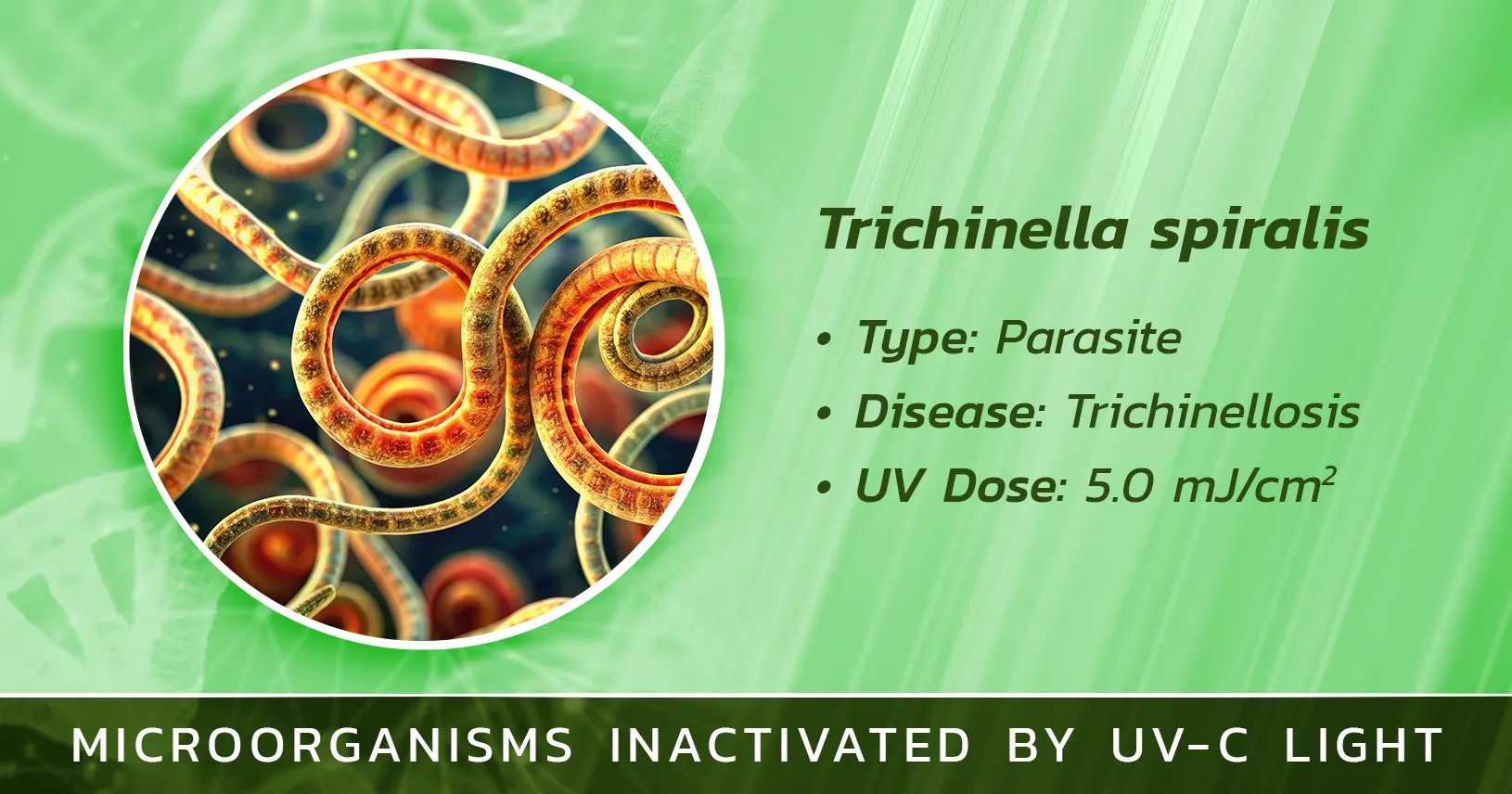

What is Trichinella spiralis?
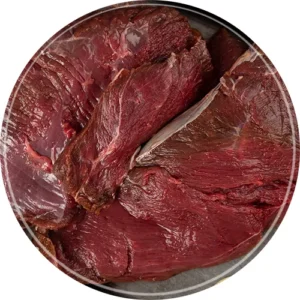
Trichinella spiralis is the most common of eight species in the Trichinella genusopen_in_new. It manifests as a roundworm parasite and grows to maturity in the small intestinesopen_in_new of carnivores and omnivores throughout the world. Humans are only affected when they consume infected meat in the form of undercooked pork and meats of other carnivores like wild boar, deer, moose, horse, fox, and bear.
These wild animals are the primary hosts and victims of the parasite, as they regularly ingest raw, infected meat from rodents and as they scavenge other decaying animal flesh in the wild. Larvae can survive in an animal carcass for up to 4 monthsopen_in_new, even in freezing temperatures.
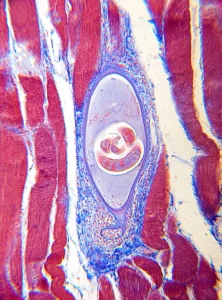
There are roughly 10,000 worldwide human infections per year, but far fewer in the U.S. due to strict government pork farm regulations and highly-adhered-to cooking guidelinesopen_in_new. You might wonder why beef and poultry are not carriers of T. spiralis. The answers are simple — cows are herbivoresopen_in_new, and would never consume raw meat, tainted or otherwise, and chickens, interestingly, possess an innate resistanceopen_in_new to the parasite.
Where is it found?

What can it infect?


How does it spread?

Preventing the Spread of Trichinella spiralis
The most effective way to curb the spread of Trichinella spiralis is cooking meat to temperatures deemed safe by government guidelines.open_in_new Pork may remain pink even when fully cooked, making it difficult to discern by eye alone that it is safe to eat. Use a food thermometer to measure internal meat temperature, ensuring it is fully cooked and safe for consumption.
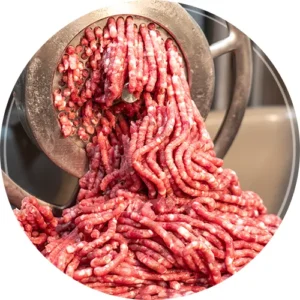
As always, washing hands with warm, soapy water before and after meat handling is highly recommended. Keep counters and food preparation devices like grinders, slicers, and knives thoroughly cleaned and disinfected after use. Realize that some forms of cooking like drying, smoking, curing, and microwaving don’t necessarily kill parasites like Trichinella spiralis. By the same token, freezing certain meats won’t necessarily kill the parasiteopen_in_new either. In smaller meat processing facilities for non-confinement-raised or pasture-raised swine, there is a greater risk of Trichinella infection.
Get More Protection with UV Disinfection
In addition to the above preventative measures, germicidal ultraviolet (UV-C) disinfection can inactivate Trichinella spiralis on meat processing equipment and surfaces. Shop our products at AtlanticUltraviolet.comopen_in_new.
Learn about these applications:
View all UV-C Application Pages.
Our germicidal lamps produce ultraviolet wavelengths at 254 nanometers, the region of maximum germicidal effectiveness. Read our FAQ blog post to learn more. See UV-C dose below.

Trichinella spiralis: Classification & UV-C Dose for Inactivation
| Organism: | Alternate Name: | Type: | Disease: | UV Dose*: |
|---|---|---|---|---|
| Trichinella spiralis | T. spiralis | Parasite | Trichinellosis / Trichinosis | 5.0 mJ/cm2 |
* Nominal Ultraviolet dosage necessary to inactivate better than 99% of microorganisms. See sources below.
Looking to inactivate another pathogen? View our complete list of UV-C doses for neutralizing many more bacteria, viruses, protozoa, mold, and yeast.
People at High Risk of Infection
The following individualsopen_in_new are at high risk of Trichinella spiralis infection:
- Regular eaters of pork and wild game meat
- Meat packers and processors
- Butchers
- Animal handlers who work with pigs, swine, and horses
- Those making homemade jerky or sausage
Trichinella spiralis Symptoms
Once ingested, larvae enter the small intestinal wall where they reach adulthood, mate, and give birth to larvae, which spread throughout the host’s body and are the cause of a variety of symptomsopen_in_new 1 or 2 days following infection:
- Loose stools
- Stomach discomfort
- Fatigue
- Vomiting
A week later, as Trichinella spiralis larvae migrate through the intestinal lining into the host’s bloodstream, one might experience the symptoms listed below. Larvae can find their way to other organs, sometimes causing serious ailments affecting the heart and brainopen_in_new.
- High fever, chills
- Muscle pain
- Achey joints
- Swollen eyelids
- Weakness
- Headaches
- Light sensitivity
- Conjunctivitis
- Itchy skin
Possible Complications from Trichinella spiralis
While rare, individuals infected with Trichinella spiralis are at risk of the following inflammatory complicationsopen_in_new:
- Myocarditis (heart)
- Encephalitis (brain)
- Meningitis (Tissue around brain and spinal cord)
- Pneumonitis (lungs)
Severe complications resulting from Trichinella spiralis have been fatal in rare cases.
Sources on Trichinella spiralis
The above information can be found on the following pages.
- CDC: Trichinellosis Lab Identificationopen_in_new
- CDC: About Trichinellosisopen_in_new
- Mayo Clinic: Trichinosisopen_in_new
- World Organisation for Animal Health: Trichinellosisopen_in_new
- Government of Canada: Pathogen Safety Data Sheet – Infectious Substancesopen_in_new
- FoodSafety.gov: Cooking Meatsopen_in_new
- AVMA Publications: Evidence, nature, and implications of the constitutive resistance to Trichinella spiralis in gallinaceous birdsopen_in_new
- Hokkaido University: Innate Resistance of Chickens to Trichinella Spiralis at the Muscular Phase of the Parasiteopen_in_new
Dosage Source
Nakayama, Hideo et al. “Effect of Ultraviolet Irradiation on the Development of Trichinella spiralis.” Japanese Journal of Parasitology. Vol. 45, No. 3. June 1996. Source Linkopen_in_new
Learn More, Shop & Contact Our Specialists
Since 1963, we’ve been engineering and manufacturing germicidal ultraviolet equipment to neutralize harmful microorganisms in water, in air, and on surfaces. Visit these helpful pages:
Shop at AtlanticUltraviolet.com
- Shop UV-C Water & Liquid Disinfectionopen_in_new
- Shop UV-C Air & Surface Disinfectionopen_in_new
- Shop STER-L-RAY® UV-C Lampsopen_in_new
- Shop Safety Productsopen_in_new
Contact Us
- Call (631) 273-0500, Monday – Friday 8am to 6pm EST
- Email Sales@AtlanticUV.com

CM-000484