

Cold UV Lamps Could Lead to Coil Mold
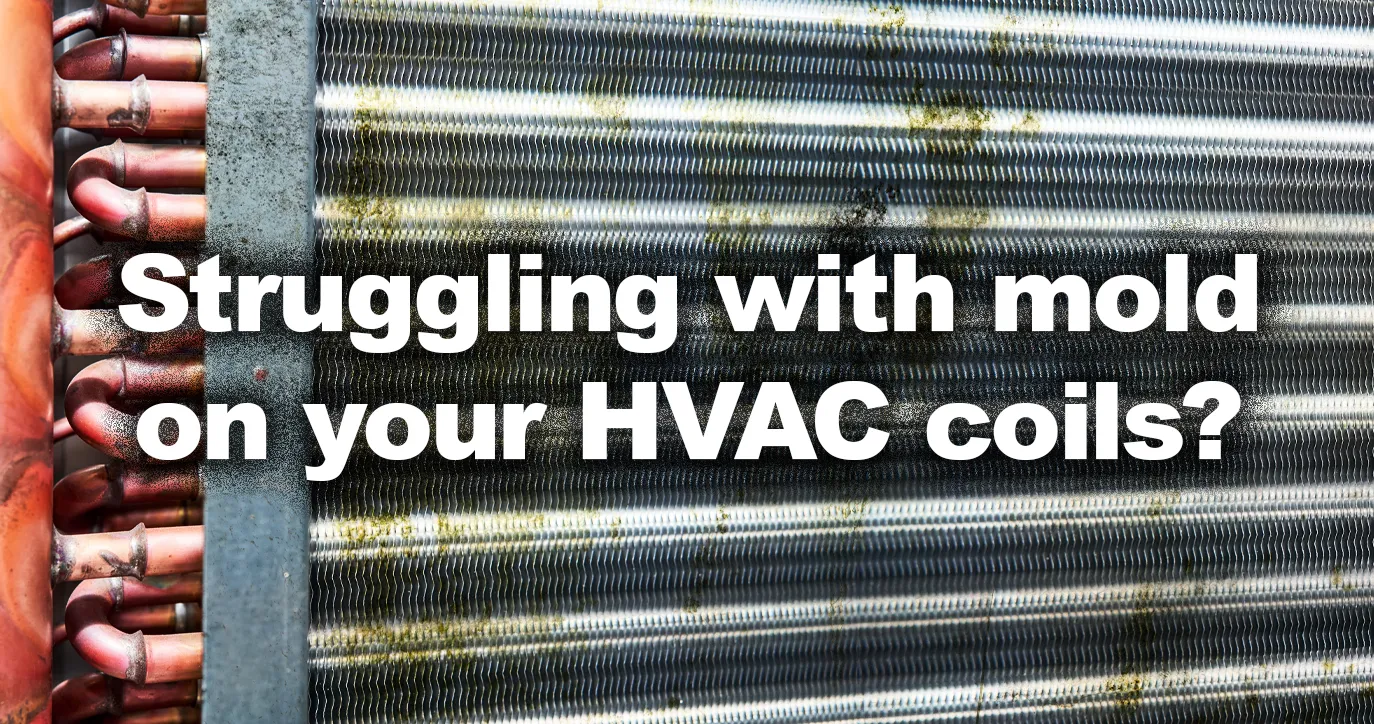
It’s an incredibly frustrating summer problem. You open up your HVAC system to check the evaporator coils, and despite having a germicidal UV lamp operating, you still observe mold or slime building up. This can result in adverse health consequencesopen_in_new, especially for those with allergies, asthma, or respiratory conditions. If your mold problem seems to get worse in the dead of summer when the AC is running constantly, the issue typically isn’t the UV lamp itself. It’s the temperature of the air hitting it.

Here is the blind spot that catches people off guard:
- The Cooling Effect: Standard UV lamps perform best in warm, stagnant air. The exact second your AC kicks on and blasts cold air (45°F to 55°F) across the lamp, its surface temperature plummets.
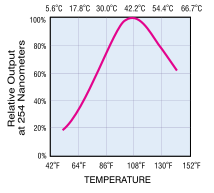
- The 50% Power Drop: That sudden cold airstream acts like a wind chill. It can cause a standard UV lamp to lose up to half of its germicidal poweropen_in_new right when the system is running the most and needs its protection.
- Optimal Temperature: According to ASHRAE, 90°F to 100°F is the ideal temperature for UV output. Lower temperatures hinder maximum UV output because there are not enough mercury atoms to generate full UV irradiationopen_in_new. Conversely, temperatures higher than 110°F cause UV output to drop and shorten the lifespan of the lamp.

How to Address the Cold Air Problem
To help prevent coil mold, you don’t need to scrap your system or install a complex industrial setup. Often, the fix is simply switching to a coated UV lamp. Coated (or encapsulated) lamps feature a protective outer sleeve—like a transparent safety coating—that does two jobs:
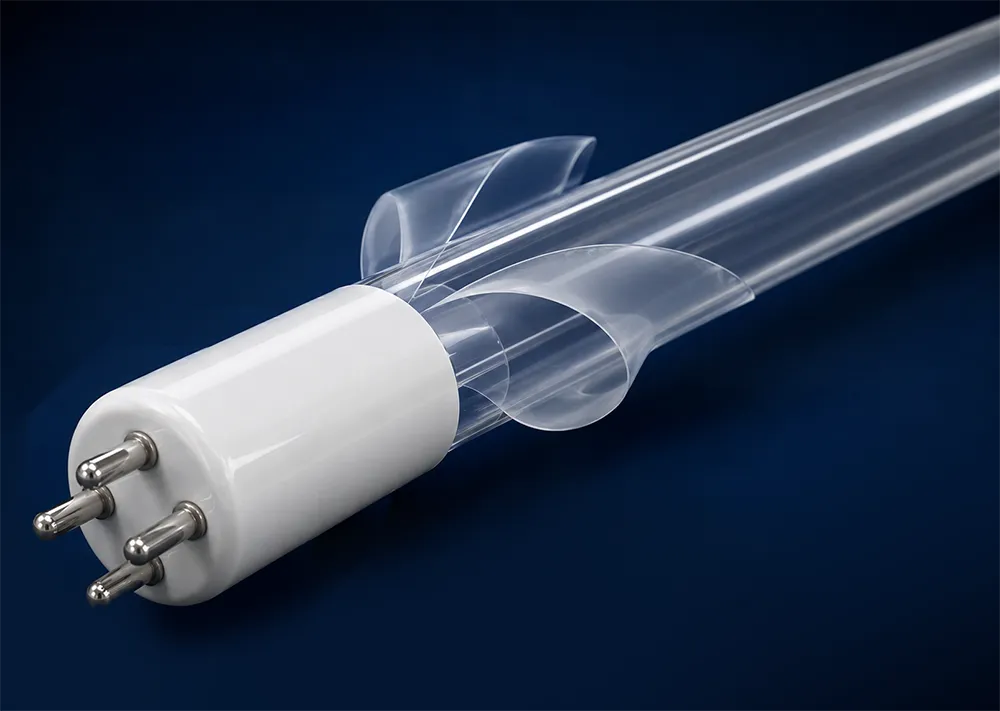
- It acts as a shatterproof barrier for safety.
- More importantly for summer, it creates a pocket of insulation around the glass. This insulation shields the lamp from the AC wind chill, keeping it at its optimal operating temperature so it maintains 100% of its mold-inactivating power, even in a cold airstream.
If you’re running UV protection this summer, don’t let a cold breeze drop your system’s efficiency (as shown in the graph here). Ensure you use UV lamps that are coated and cleaned frequently, as duct environments can be dusty and dingy, and nothing hinders UV efficiency more than a dirty lamp.
Learn more about the benefits of coated UV lamps in our FAQ blog post “What are the Benefits of a UV Lamp Safety Shield?”
Wall Temperatures
A Coil Mold-Busting System Sized for You
If you’re looking to incorporate an efficient UV air duct disinfection system like our Aerologic®, our specialists can customize a system for your setting, providing the contact time and lamp output required.
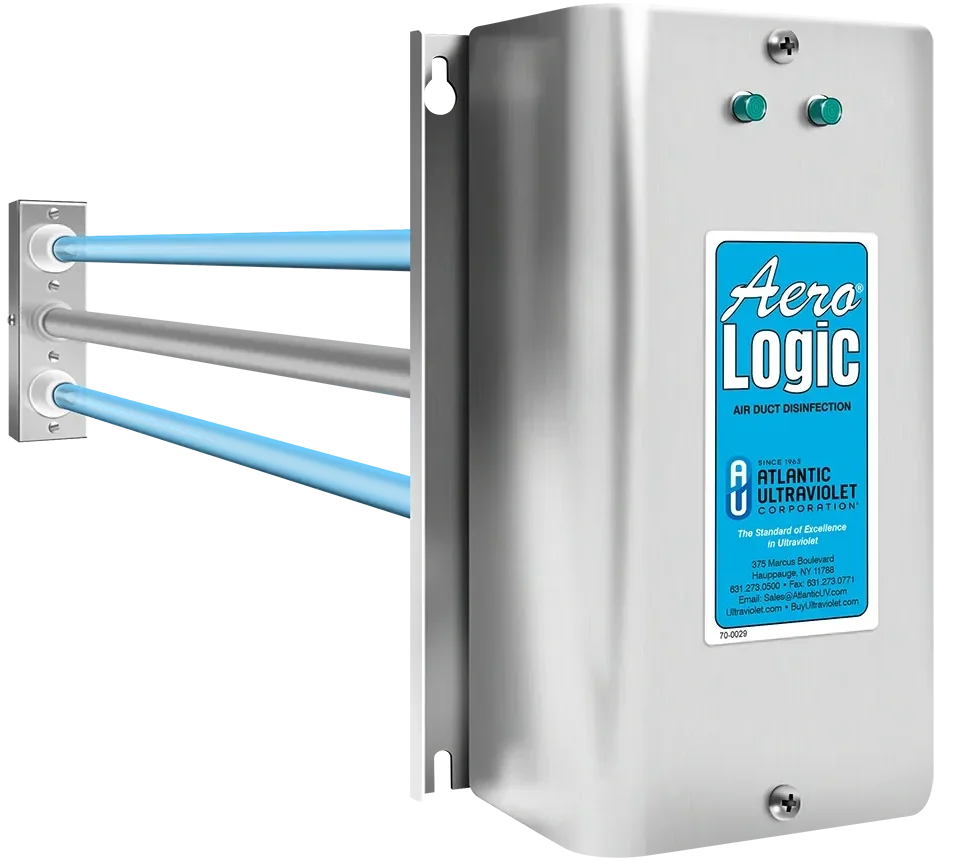
We also stock equivalent replacementopen_in_new UV-C lamps for over 250 brands and 5,000 models, including HVACR equipment.
Every layout is different, and troubleshooting airflow issues can get tricky. If you are running into problems with the current setup, or if you have any technical questions, our engineers are here to help. Call us at (631) 273-0500, email Sales@AtlanticUV.com, or drop your question into our inquiry formopen_in_new.
Learn More & Shop AeroLogic®
Made in the USA from U.S. and imported parts (since the 1950s), our AeroLogic® UV-C Air Duct Disinfection models are constructed of the highest quality materials and use germicidal UV lamps to purify HVAC Ducts. Models have many optional accessories available, making them flexible systems for residential, commercial, and industrial applications.
Shop at AtlanticUltraviolet.com
- Shop AeroLogic® Modelsopen_in_new
- Compare Air & Surface Disinfection Modelsopen_in_new
- Shop UV-C Water & Liquid Disinfectionopen_in_new
- Shop STER-L-RAY® Germicidal UV Lampsopen_in_new
- Shop Safety Productsopen_in_new
Contact Us
- Call (631) 273-0500, Monday – Friday 8am to 6pm EST
- Email Sales@AtlanticUV.com

CM-000487