
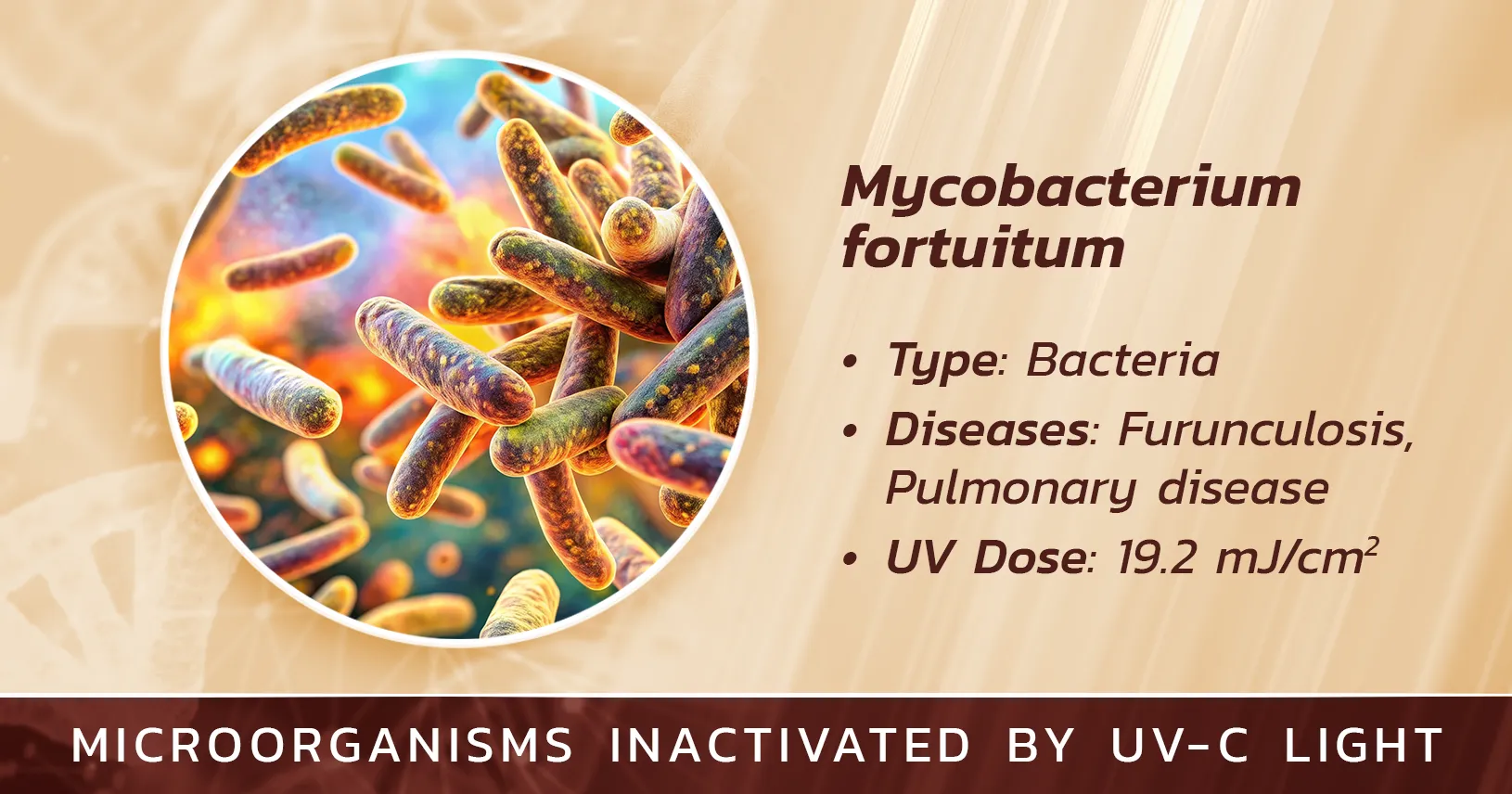

What is Mycobacterium fortuitum?
Mycobacterium fortuitum is one of many nontuberculosis mycobacteria (NTM). The genus Mycobacterium contains over 190 different speciesopen_in_new of rod-shaped, gram-positive bacteria, many pathogenic to humans and animals. Myco derives from the Greek, meaning “fungus”, drawing reference to its mold-like colony formations. While most species within this genus are non-pathogenic, exposure to many including Mycobacterium fortuitum can lead to infections like furunculosis. One of its most distinguishing features is its complex lipid-rich cell wallopen_in_new, which affords it a high level of protection from those entities which would try to eliminate it.
Prevalent around the globe and identified in over 50 strainsopen_in_new, Mycobacterium fortuitum can be found in both natural and processed water, sewage, and dirt. When compared to its Mycobacterial brothers —such as M. avium and M. tuberculosis — M. fortuitum is considered a “fast-growing” species. As such, it is classified in the “RGM” group (Rapid Growing Mycobacteria) with M. abscessus, M. chelonae, and others.
Where is it Found?


What can it Infect?

How does it Spread?



Preventing the Spread of Mycobacterium fortuitum
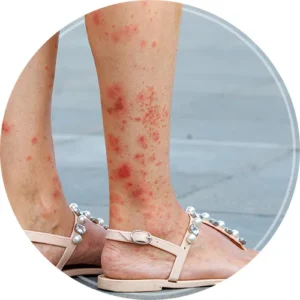
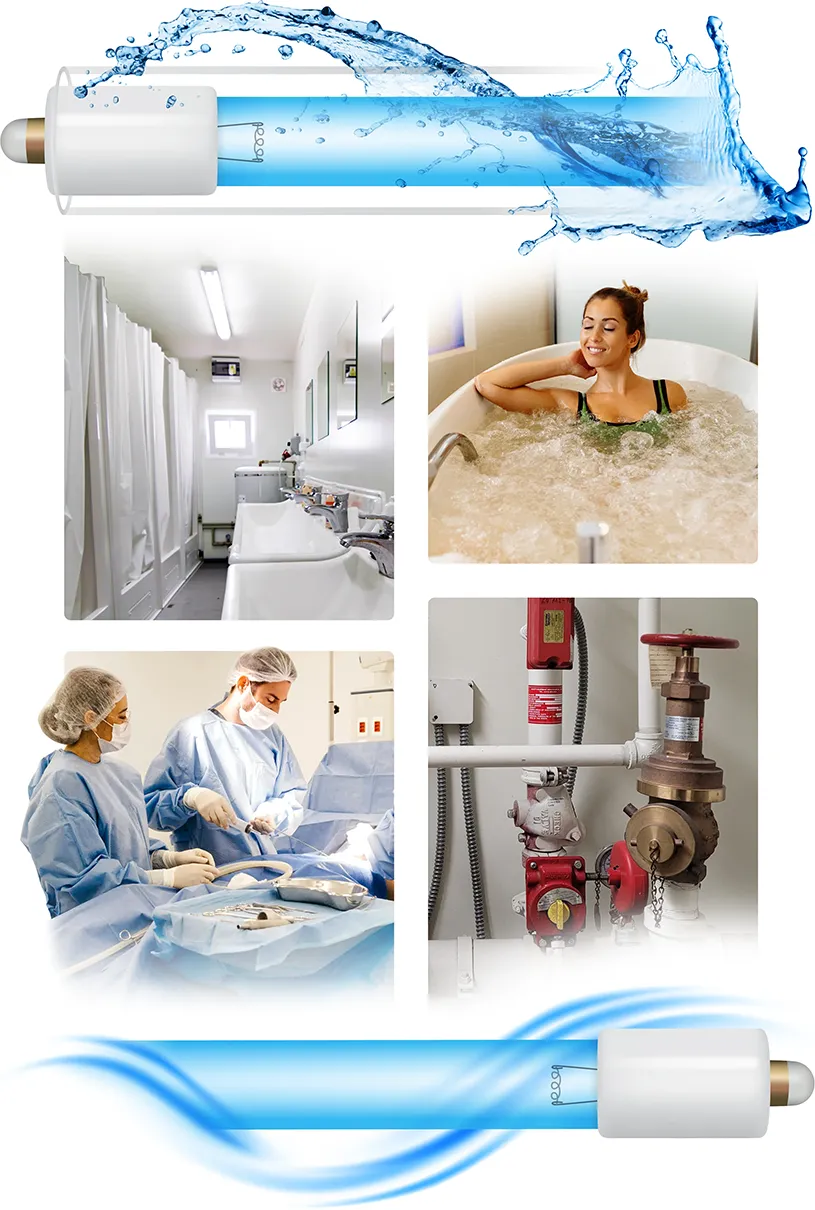
Due to suboptimal sanitary spa conditions, Mycobacterium fortuitum sometimes causes a wave of furunculosis reports after pedicure treatments. In North Carolina, Forty casesopen_in_new of pedicure-associated furunculosis were reported over 4 years. Another outbreak in California affected 100 pedicure customers at a single salon. It was discovered that M. fortuitum was colonizing in the organic debris which had accumulated behind water recirculation screens feeding 10 different footbathsopen_in_new.
Hospital patients have become infected with M. fortuitum after surgery, as disease can be contracted through open woundsopen_in_new. Facility-wide healthcare water systems can also harbor this opportunistic pathogenopen_in_new. Hot tubs have been implicated in the spread of Mycobacterial infectionopen_in_new, both from water and breathing in aerosols.
As with most bacterial infections, the best defense against the spread of Mycobacterium fortuitum is good personal hygiene, specifically the frequent washing of hands and potentially infected areas. Surfaces and equipment, specifically salon footbaths should be adequately disinfected, including the intake lines and connections that may facilitate bacterial growth. Treat minor cuts and scrapes quickly and manage underlying conditions that may weaken the immune system.
Get More Protection with UV Disinfection
In addition to the above preventative measures, germicidal ultraviolet (UV-C) water disinfection can be used for a facility’s entire system or at the site of footbaths. UV surface disinfection can inactivate Mycobacterium fortuitum on surfaces in high-risk locations such as salons, spas, and medical facilities. Shop our products at AtlanticUltraviolet.comopen_in_new.
Learn about these applications:
View all UV-C Application Pages.
Our germicidal lamps produce ultraviolet wavelengths at 254 nanometers, the region of maximum germicidal effectiveness. Read our FAQ blog post to learn more. See UV-C doses below.
Mycobacteria: Classification & UV-C Dose for Inactivation
| Organism: | Alternate Name: | Type: | Disease: | UV Dose*: |
|---|---|---|---|---|
| Mycobacterium fortuitum | Microbacterium ranae | Bacteria | Furunculosis, pulmonary disease | 19.2 mJ/cm2 |
| Mycobacterium avium | M. avium, M. avium complex (MAC) | Bacteria | Furunculosis, Pulmonary disease | 12.0 mJ/cm2 |
* Nominal Ultraviolet dosage necessary to inactivate better than 99% of microorganisms. See sources below.
Looking to inactivate another pathogen? View our complete list of UV-C doses for neutralizing many more bacteria, viruses, protozoa, mold, and yeast.
People at High Risk of Infection
The following individuals are at high risk of Mycobacterium fortuitum infection:
- Those in hot and humid climates
- Those who are immune-compromised or have pre-existing pulmonary conditions
- Patients in hospitals
- Customers at salons and spas
Mycobacterium fortuitum Symptoms
Mycobacterium fortuitum symptoms include the following:
- Red, swollen, pus-filled painful boils (also called furuncles)
- Cough
- Shortness of breath
- Persistent coughs
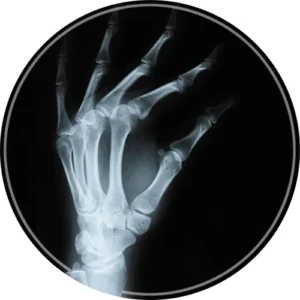
- Skin, soft tissue, and bone infections
Possible Complications from Mycobacterium fortuitum
Individuals infected with Mycobacterium fortuitum are at risk of the following complications:
- Scarring
- Recurrence of boils
- Cellulitis
- Carbuncles (clusters of boils)
- Osteomyelitis
- Systemic infection from bacteria entering the bloodstream
Mycobacterium fortuitum is also linked to pulmonary disease. Those most susceptible to this infection have pre-existing lung conditions or are smokers. Symptoms include cough, sputum, and other typical respiratory issues. Favorable results can be obtained through the use of appropriate antibioticsopen_in_new. Unsuccessfully treated complications could result in hospitalization.
Sources on Mycobacterium fortuitum
The above information can be found on the following pages.
- Medscape: Mycobacterium fortuitumopen_in_new
- Wikipedia: Mycobacteriumopen_in_new
- CDC: Mycobacteria in nail salon footbathsopen_in_new
- National Library of Medicine: Clinical Characteristics and Treatment Outcomes of Mycobacterium fortuitum Pulmonary Diseaseopen_in_new
- Science Direct: Mycobacterium fortuitumopen_in_new
- CDC: Nontuberculous Mycobacterial Disease Following Hot Tub Exposureopen_in_new
- Nationwide Children’s: Folliculitis, Furuncles, and Carbuncles in Childrenopen_in_new
- Mycobacterium fortuitum Infections in Surgical Woundsopen_in_new
- Considerations for Reducing Risk: Water in Healthcare Facilitiesopen_in_new
Dosage Source
Ultraviolet Germicidal Irradiation Handbook: UVGI for Air and Surface Disinfection. Wladyslaw Kowalski. Springer-Verlag Berlin Heidelberg, 2009.
Learn More, Shop & Contact Our Specialists
Since 1963, we’ve been engineering and manufacturing germicidal ultraviolet equipment to neutralize harmful microorganisms in water, in air, and on surfaces. Visit these helpful pages:
Shop at AtlanticUltraviolet.com
- Shop UV-C Water & Liquid Disinfectionopen_in_new
- Shop UV-C Air & Surface Disinfectionopen_in_new
- Shop STER-L-RAY® UV-C Lampsopen_in_new
- Shop Safety Productsopen_in_new
Contact Us
- Call (631) 273-0500, Monday – Friday 7am to 6pm EST
- Email Sales@AtlanticUV.com

CM-000481